Japanese Wine Market

A mature market with strong international expertise.

Japan is a mature, internationally oriented wine market with a high level of professional knowledge. Precise positioning, a credible story of origin and pricing that fits the intended channel are essential.

The EU-Japan Centre describes Japan as a mature and saturated wine market: domestic and imported wines are widely available, and wine has long been part of Japanese food and dining culture. Around 30 million people are estimated to consume wine. Expectations regarding product quality, packaging, communication and service are correspondingly high.

This makes Japan attractive, but demanding. A German wine competes not only with other German products, but with established references from France, Italy, Spain, Chile, the United States, New Zealand and increasingly Japan itself.

For newcomers, origin must be understandable, pricing must work in the chosen channel and a local partner must contribute more than logistics alone. The EU-Japan Centre explicitly notes the importance of local partners in navigating Japan’s complex distribution structure.

Since the EU-Japan Economic Partnership Agreement entered into force on 1 February 2019, Japanese tariffs on EU wine have been fully eliminated. Trade access has therefore become easier, but a product does not become commercially relevant automatically.

Market monitor

Japan in figures

last checked 17.10.2026

Figures are based on the cited sources. The date indicates the data or review status, not the publication date of this website.

History

An established market with its own wine culture.

Japan’s contemporary wine culture is not the result of one trend, but of decades of engagement with international wine. Broader consumption began to develop from the 1960s as gastronomy and food culture became increasingly international. Wine became more visible around the 1964 Tokyo Olympics and Expo 1970 in Osaka; in 1975, table-wine consumption overtook sweetened fruit wine for the first time.

Economic growth and international fine wine

In the 1980s, this development coincided with Japan’s economic rise. During the Bubble Economy, international gastronomy, business entertaining and luxury consumption expanded strongly. Wine—especially prestigious French origins—became part of this environment. A pronounced Beaujolais Nouveau boom followed in 1987, and by 1989 annual wine consumption had already reached around 100,000 kilolitres. It continued to grow in subsequent decades, supported by recurring wine booms, broader retail availability and an increasingly independent Japanese wine culture.

The lasting significance is less the luxury of the Bubble years than what remained: an unusually dense range of international reference wines. Major names from France, Italy, Germany and the New World have been represented for decades. Japanese importers and retailers have consequently built not only broad portfolios, but often long-term relationships with individual producers.

Wine education well beyond gastronomy

A strong culture of education and certification developed in parallel. The Japan Sommelier Association held its first wine seminar in 1969, introduced the first national sommelier certification examination in 1985 and later established programmes for wine enthusiasts outside professional gastronomy. Today, J.S.A. Wine Expert and related programmes explicitly address private wine lovers, and WSET courses are offered in Japan at several levels in Japanese.

This helps explain the distinctive market culture: wine knowledge is not limited to sommeliers. Private consumers invest time and money in courses, examinations, tastings and continuing education. Japan’s broader emphasis on precision, product knowledge and quality is therefore clearly reflected in wine—from gastronomy to highly informed private consumers.


Open to new styles earlier than many assume

Japan is also less conservative than the image of a market focused solely on Bordeaux, Burgundy and Champagne might suggest. It was among the markets in which natural and low-intervention wine developed an independent scene early on. Tokyo restaurant Shonzui specialised in natural wine as early as 1993; importers, bars and retailers subsequently began working with such producers. Today classic fine wine, grower Champagne, natural wine, international cult producers and Japanese wine coexist naturally.

Mature and demanding—not closed.

Current analyses describe the market as mature and broadly saturated. For German producers, however, this should not be translated as “no opportunities”. Rather, Japan is already extremely well supplied and a new producer cannot expect automatic shelf space. Market entry is often slow, personal and relationship-driven. Industry participants repeatedly emphasise patience, presence, personal recommendations and long-term trust over anonymous importer lists or short-term sales campaigns.

This can be an advantage for German wineries with a clear profile. Producers who can explain their wines credibly, remain present in the market and maintain relationships over time meet business partners and consumers who evaluate quality carefully—and who often understand good cooperation in equally long-term terms. DJWI works at precisely this interface: not by promising rapid market entry, but by providing direct access to knowledge, feedback and relationships.

1964

Tokyo Olympics: western gastronomy and wine become more visible.

1970

Expo Osaka and the first major wine boom alongside increasing internationalisation.

1980s

Bubble Economy, international gastronomy and luxury consumption strengthen wine’s presence.

1990s

Red-wine boom, greater specialisation and early natural-wine pioneers broaden the spectrum.

today

A mature market with strong sommellerie, diverse retail and highly informed consumers.

Sommelier culture

Professional knowledge is institutionally established.

The Japan Sommelier Association emerged from an industry initiative in 1969 and held its first wine seminar in the same year. It introduced the first national sommelier certification examination in 1985 and joined the Association de la Sommellerie Internationale in 1986. Tokyo hosted the World Sommelier Championship in 2013.

In 2025 the J.S.A. operated through 50 regional branches across Japan. This organisational depth explains an important element of Japanese wine culture: knowledge is not concentrated in a handful of top restaurants, but is continually disseminated through examinations, seminars, competitions and regional networks.

What this means for German producers

An informed market makes more precise comparisons.

Producers therefore often meet counterparts who can precisely contextualise international regions, vintages, producers and styles. This is both an opportunity and a challenge. Arguments about origin work when they are concrete; abstract quality claims or generic romantic images of Germany carry much less weight.

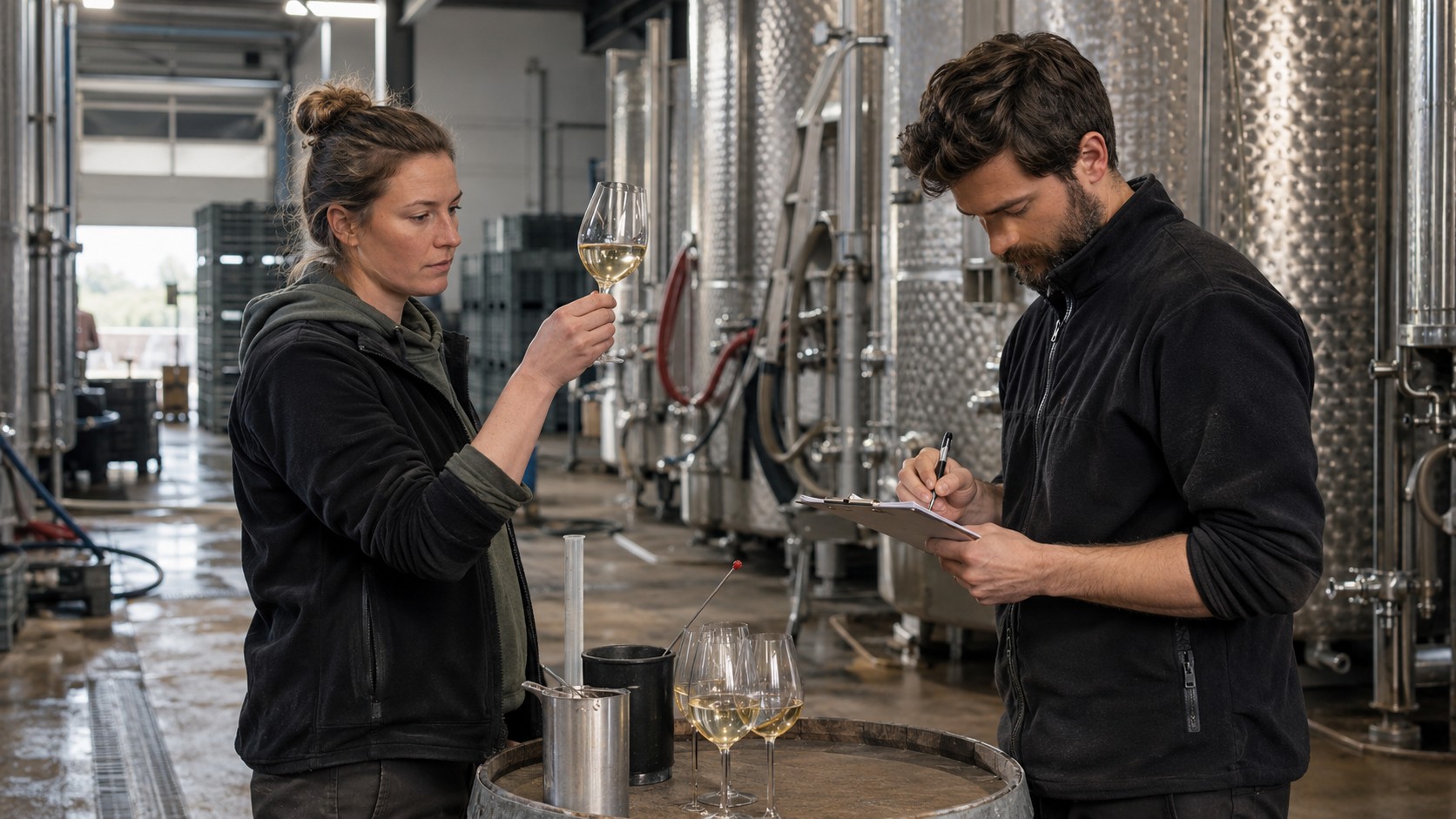
This professional competence is central to DJWI: market feedback should not come only from generic consumer surveys, but from direct dialogue with people who professionally taste, buy, recommend or market wine.

Premium and price competition

Two markets exist at the same time.

International premium segment

Japan is one of Asia’s most important import markets for wine. France continues to dominate import value: in 2025, French wine accounted for more than 60 percent of total import value. This premium orientation is especially visible in sparkling wine: France represented around 65 percent of the segment’s import value. At the same time, the average import value of sparkling wine was exceptionally high at around €30.48 per litre. This figure is substantially driven by the importance of high-priced Champagne and demonstrates how firmly the premium segment is established in Japan.

For specialist retailers, fine dining and collectors, this creates an exceptional density of international reference products. A new German wine is not assessed in an isolated German context, but alongside Burgundy, Bordeaux, Champagne, Barolo, Napa or New Zealand.

At the same time: intense price pressure

Premium orientation does not mean low price sensitivity. Chile remains one of the strongest suppliers by volume; in 2024 Japanese wine-import volume increased while total value fell. For bottled wines, average import value per litre declined noticeably. This is the other side of the market: supermarkets, casual dining and broad retail are highly competitive and can offer international wines at very aggressive consumer prices.

For German producers, the conclusion is clear: “Japan is premium” is not a sufficient pricing strategy. Price, channel, packaging and target group must fit together.

Import, trade & distribution

Market access does not end with the tasting.

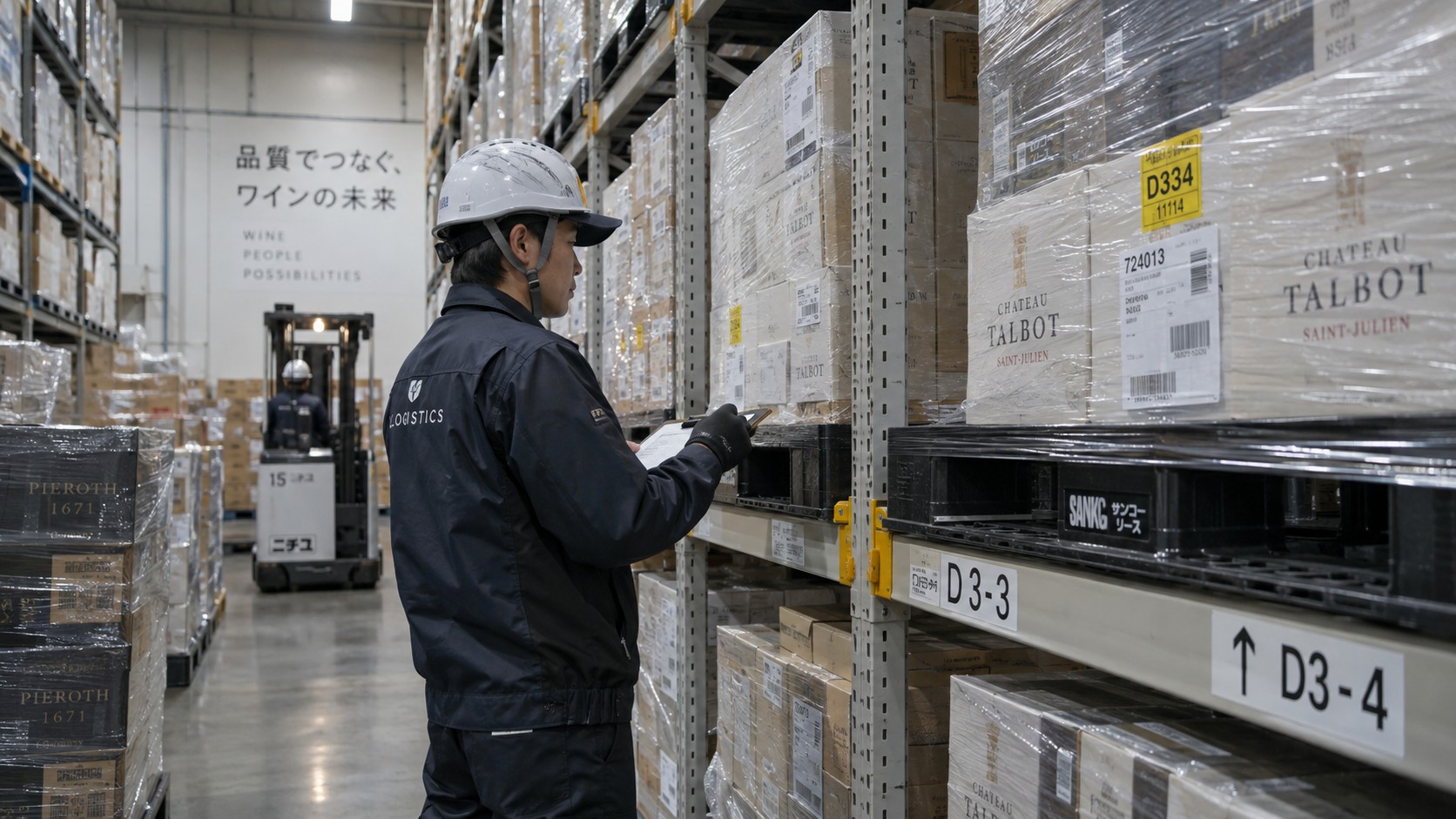
Between producer and end customer lie import, storage, national distribution, wholesale, gastronomy and retail. Japan is therefore also an operational challenge. A wine can be convincing in the glass and still fail if landed cost, case format, supply reliability or distribution structure do not fit the intended channel.

The EPA has made market access easier because Japanese tariffs on EU wine have been eliminated since 2019. The need for a reliable local partner remains: regulation, logistics, sales organisation and actual market access are separate tasks.

German wine in Japan

Between the familiar Riesling image and a new reality.

Germany’s established image is not without value—quite the opposite. The German Wine Institute describes Riesling and other German white wines as having a positive image in Japan. The challenge is the narrowness of that image. Pinot Noir, Chardonnay, Pinot Blanc, high-quality sparkling wines, dry terroir-driven wines and a new generation of distinctive wineries are much less firmly associated with Germany internationally.

Styles have also changed. In 2025, 53 percent of German quality and Prädikat wines were dry; in 2010 it was only 40 percent. This modern spectrum offers opportunities if it is communicated through concrete producers and credible tasting experiences rather than an abstract story about a “new German wine world”.

Climate & development

Germany as a wine country in transition.

Climate change is shifting the conditions of European viticulture—more subtly than the simple narrative of Germany as a “winner” suggests. A 2024 study of 1,085 European wine origins identifies many southern and eastern European regions as highly climate-vulnerable, while some higher-altitude and more northerly regions show lower vulnerability. Rheinhessen is among the examples with comparatively favourable resilience.

At the same time, heat, drought, changing ripening patterns and extreme weather are already realities for German growers. Germany’s opportunity is therefore not that other regions simply become “too hot”, but in a relative shift: cooler sites, high acidity, moderate alcohol and adaptability may become strategically more important in European comparison. This is a long-term development, not a free pass.

Regulation & market access

Keep trade policy, labelling and market rules in view.

Demand is not the only factor determining market entry. Trade agreements, rules of origin, approved oenological practices, Japanese mandatory information and changes in EU wine law can directly affect export, labels and product planning.

EU-Japan Economic Partnership Agreement

Since the EU-Japan EPA entered into force on 1 February 2019, Japanese tariffs on EU wines have been fully eliminated. The agreement also regulates origin, mutual recognition of oenological practices and protection of geographical indications. Since January 2021, Japan has recognised all EU oenological practices covered by the relevant phase of the agreement. Exporters must nevertheless continue to apply the current origin and documentary requirements correctly.

EU Wine Package 2026

In 2026, the EU adopted a modernised package of measures for the wine sector. It covers climate adaptation, planting flexibility, market management and simplified labelling. Particularly relevant for third-country exports: wines intended for export are exempted from certain EU-internal obligations concerning ingredient lists and nutrition declarations, avoiding unnecessary EU consumer labelling on products destined for third countries.

Japanese mandatory information

Imported wine is subject to Japanese labelling rules. Among other requirements, imported status or country of origin must be indicated, together with general food- and alcohol-law information. Additives such as sulphites may also require declaration. In practice, wine sold in Japan therefore normally carries a Japanese back label or supplementary sticker.

Label design is not only design

Japanese mandatory information should be considered early in product design. Country of origin, alcohol content, importer details and, where applicable, additive declarations need sufficient space and should not be added somewhere on the bottle at the last minute. This is particularly relevant for premium products, where compliance should interfere as little as possible with the visual presentation.

DJWI monitoring in the production site

This section is intended to become a regularly updated monitoring feed based on defined primary and specialist sources, including the European Commission, Council of the EU, Access2Markets, Japan National Tax Agency, JETRO, relevant Japanese authorities and selected trade publications. New developments will be classified by topics such as trade policy, EPA, labelling, import rules, market data and industry developments.

Current

Market & industry

Current developments in trade, politics, regulation and the wine sector, selected for their relevance to the German-Japanese wine market.